
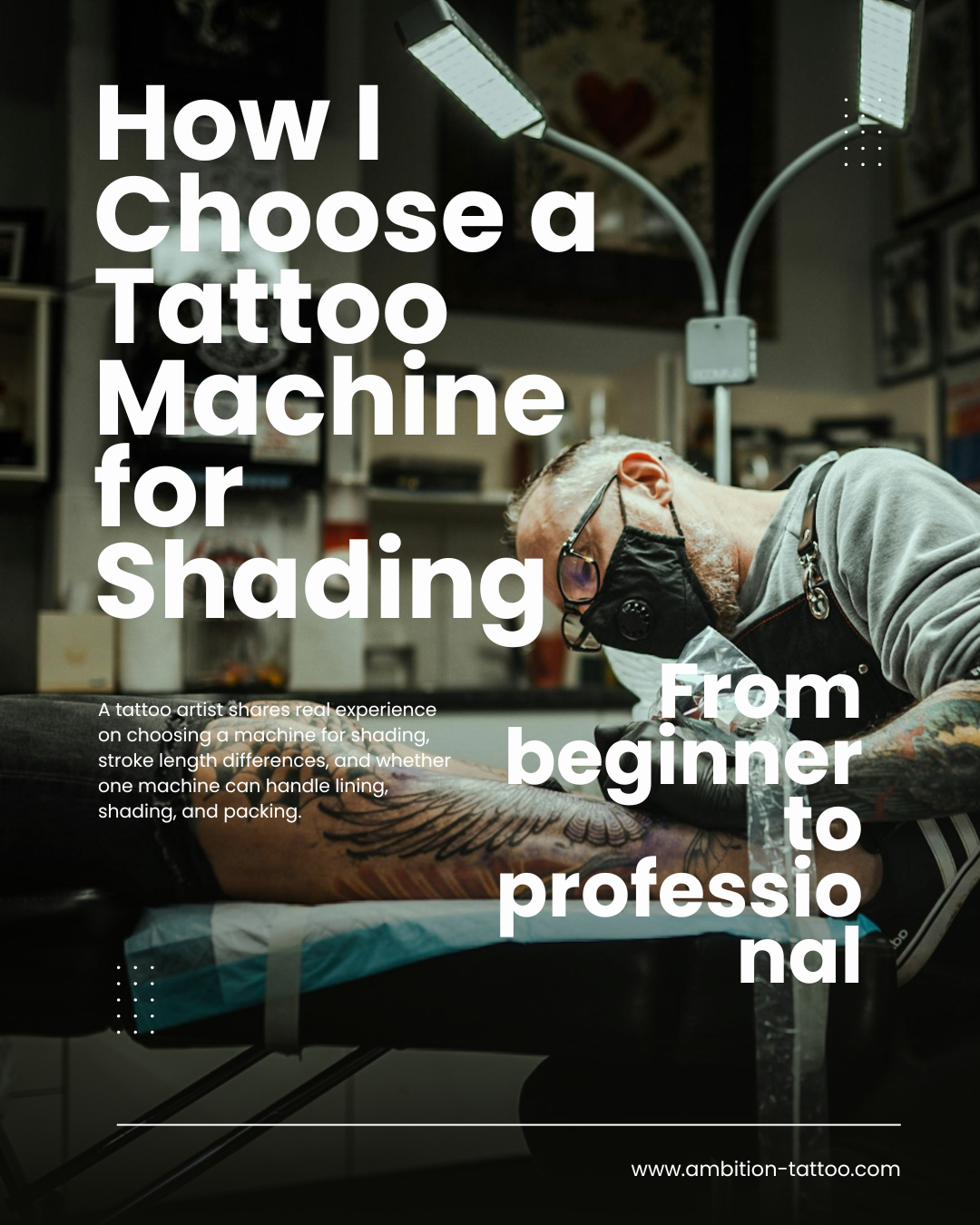
I’ve seen this question come up a lot — especially from newer artists:
“Do I need a separate machine just for shading, or can one machine do everything?”
And honestly… I used to overthink this too.
When I started, I had multiple machines laid out on my station like I was preparing for surgery. One for lining, one for shading, one for packing. It looked professional, but in real sessions it was kind of a mess.
I was constantly switching machines, adjusting settings, losing flow.
At some point, I started asking myself:
Am I tattooing… or just managing tools?
Shading isn’t as “fixed” as people think
One thing I didn’t realize early on is that “shading” isn’t just one thing.
Some days I’m doing:
- soft black and grey portraits
- smooth whip shading
- heavier background packing
- blending into linework mid-session
And each of those feels different on the skin.
That’s when I stopped thinking “I need a shading machine”
and started thinking:
“I need control over how the machine hits the skin.”
Stroke length changed how I work (not immediately though)
I didn’t care about stroke length at all in the beginning.
Honestly, it sounded like one of those specs people argue about online but doesn’t matter in real life.
But over time, I started noticing something:
- 3.0mm felt smoother but slower
- 4.0mm packed faster but felt heavier
- short stroke was nice for soft work, but not efficient
And depending on the tattoo, I would constantly wish I had “just a slightly different feel.”
That’s when things started to click.
It’s not about “best stroke” —
it’s about having options during the same session.
“Do you actually use one machine or multiple?”
I’ve seen this debated a lot on forums and Reddit-style discussions.
And the answers are always split:
Some artists say:
“You need separate machines for everything if you’re serious.”
Others say:
“I’ve been using one setup for years and it’s fine.”
But in reality, most working artists fall somewhere in between.
They might prefer specialized machines…
but in practice, they also value something that doesn’t slow them down.
Especially in:
- guest spots
- long realism sessions
- travel setups
- busy studio days
Switching machines constantly isn’t always practical.
Where adjustable stroke machines started making sense to me
I used to think adjustable stroke was more of a “feature on paper.”
But after actually using one in real sessions, it started to make sense.
Not because it replaces everything perfectly —
but because it reduces decision fatigue.
Instead of asking:
- “Which machine should I pick?”
You just adjust:
- how soft or hard you want it to hit the skin
That alone changes workflow more than people expect.
My current setup mindset
I wouldn’t say I’ve “replaced” everything with one machine.
That’s not realistic.
But my thinking definitely changed.
Now I care more about:
- how consistent the machine feels
- how easily I can adjust for different skin areas
- how long I can work without switching setups
Less about collecting tools.
More about staying in flow.
Why something like Epoch Max fits into this idea
I’ll be honest — I don’t think any machine is perfect for everything.
But some are flexible enough that you stop feeling limited by them.
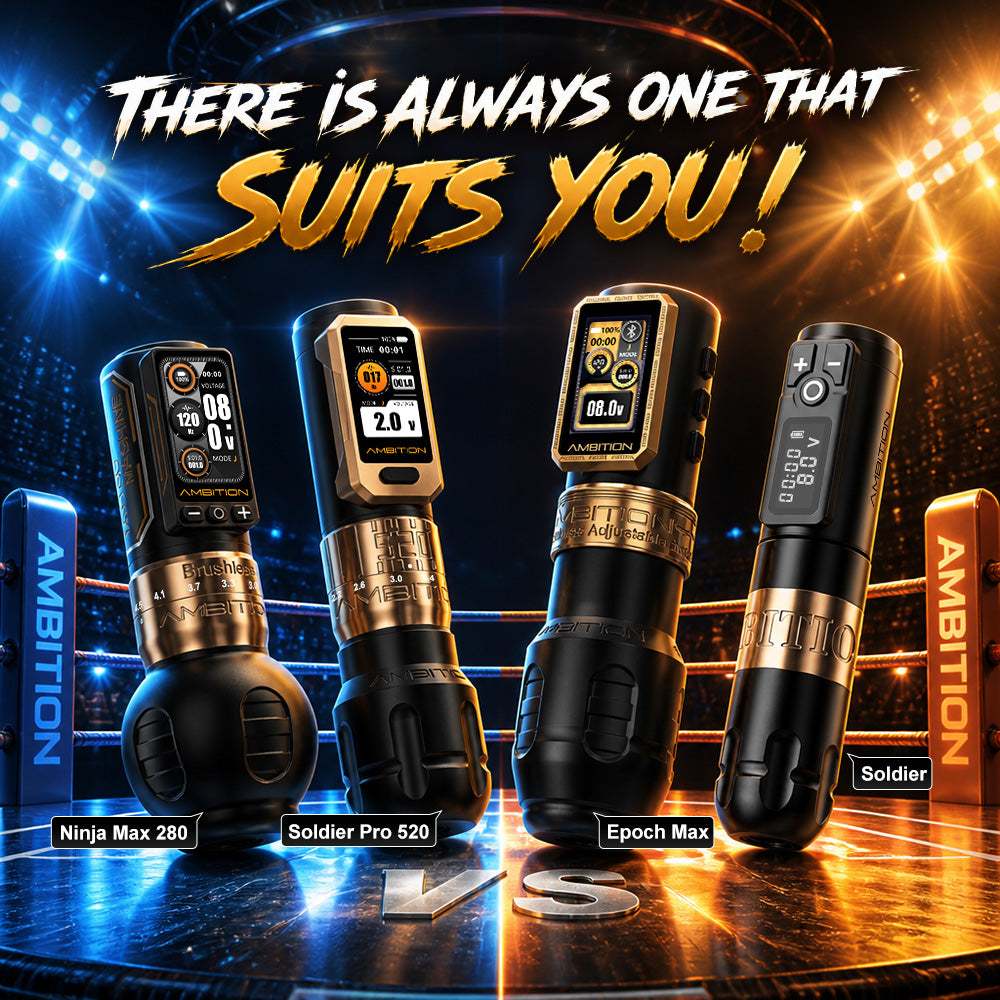
Machines like Epoch Max (1.0–5.0mm adjustable stroke) fall into that category.
What matters more than specs is what it allows in practice:
- soft shading when you need control
- stronger hit when you need efficiency
- lining without switching setups
It doesn’t replace specialization completely —
but it reduces how often you need to think about switching tools.
And in long sessions, that matters more than people think.
🔥 Final thought
If I had to summarize what changed for me:
It’s not “what is the best shading machine”
It became:
“How do I stay in flow without constantly changing tools?”
And that’s usually where better machines start to make sense — not on paper, but in real sessions.


Dejar un comentario
Este sitio está protegido por hCaptcha y se aplican la Política de privacidad de hCaptcha y los Términos del servicio.